Tag Archives: patent

Large Patent Verdict in Pittsburgh – Marvell Case

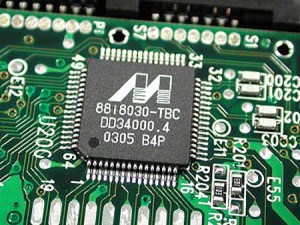
marvell_chipBy Henry M. Sneath, Esq. – Chair of the Picadio Sneath Miller & Norton, P.C. Intellectual Property Group. Contact him at hsneath@psmn.com

Last week a Pittsburgh federal court jury found on behalf of local university CMU against hard drive chip maker Marvell (See attached photo) on claims of patent infringement and willfulness. The $1.17 Billion award was huge by any standards and still faces post trial motions which could vacate the verdict or increase it for willfulness, which the jury found. Judge Fischer could grant any number of what will surely be multiple post trial motions including a motion for mistrial, which was made by Marvell counsel during CMU’s closing argument and on which she denied the motion without prejudice to rule on it after the announcement of a verdict. In other words, she could still grant a mistrial and vacate the one month trial and verdict. She could also increase the verdict by as much as threefold based on the willfulness finding. The article attached below indicates that no tech verdict this large has ever stood the test on appeal. Here is one of a number of good descriptions of the case as it has been written about extensively over the last week:  http://arstechnica.com/tech-policy/2012/12/jury-slams-marvell-with-mammoth-1-17-billion-patent-verdict/
Here also is an interesting video take on the case.
http://www.bloomberg.com/video/david-martin-on-carnegie-mellon-marvell-patent-case-er1U0P~yQXC616MuXqU_Hw.html

We will continue to follow this important case.

Are Human Genes Patentable?–Supreme Court to Decide in Association for Molecular Pathology v. Myriad Genetics

by: Robert Wagner, intellectual property attorney at Picadio Sneath Miller & Norton, P.C. ()

On November 30, 2012, the United States Supreme Court granted certiorari in Association for Molecular Pathology v. Myriad Genetics (No. 12-398) to decide whether human genes are patentable. The case arises out of a declaratory judgment action brought by various researchers and institutions that certain claims in patents held by Myriad Genetics relating to isolated genes associated with a predisposition to breast and ovarian cancer are invalid because the subject matter of the patents is not eligible to be patented under 35 U.S.C. § 101.

SupremeCourtImage_1What Subject Matter Can Be Patented?

The Patent Act provides that “Whoever invents or discovers any new and useful process, machine, manufacture, or composition of matter, or any new and useful improvement thereof, may obtain a patent therefor . . . .” 35 U.S.C. § 101.

While this statement and scope is broad, it is not unlimited. The Supreme Court has held, most recently in Mayo Collaborative Services v. Prometheus, Inc., 132 S. Ct. 1289 (2012), that laws of nature, natural phenomena, and abstract ideas are not eligible to be patented, as are mental processes and products of nature.

The question in this case is whether human genes fall within the scope of Section 101, or whether they are natural phenomena that are ineligible to be patented.

Split Decision at the Federal Circuit

In deciding this issue, the Federal Circuit panel (comprised of Circuit Judges Lourie, Moore, and Bryson) each wrote separate opinions endorsing different rules to decide this issue. Judge Lourie (writing for the majority) found that human genes are patentable, reasoning that the isolated DNA molecules at issue in the claims of the patents are not found in that form in nature. Because they are different from natural materials and isolated through the product of human ingenuity, they are eligible to be patented.

Judge Moore agreed that the claims are patent eligible, but for a different reason. She noted that human genes have been patented for years and are specifically allowed by the US Patent Office. She also noted that if she was writing on a blank slate, she might reach a different conclusion.

Finally, Judge Bryson dissented, finding the claims were not patent eligible. He found that the isolated genes performed the same function as they do inside the full DNA sequence. Thus, there was no transformation, and the genes are nothing more than an extraction of a naturally-occurring phenomena.

The researchers and institutions petitioned the Supreme Court for a writ of certorari, which the Supreme Court granted on the limited question of “Are human genes patentable?”

Numerous Amici Have Weighed in

Given the importance of this issue, both to researchers and pharmaceutical companies, a number of parties have weighed in with the Supreme Court, urging that the standard for patent eligibility for human genes be clarified. Their briefs can be read here.

It will be interesting to follow this case and its briefing in the coming months to see how the Supreme Court decides this issue or whether it leaves it to Congress to decide.

Method to Estimate Risk of Fetal Down’s Syndrome Not Patent-Eligible Subject Matter

By: Joe Carnicella, intellectual property attorney at Picadio Sneath Miller & Norton, P.C.

On November 20, 2012, the Federal Circuit held that a method to assess the risk of fetal Down’s syndrome is not patent-eligible subject matter pursuant to 35 U.S.C. 101.  In PerkinElmer Inc. v. Intema Ltd., a unanimous panel considered the issue of patentability under section 101 and concluded that Intema’s screening patent, U.S. Patent No. 6,573,103 (“the ‘103 patent”), was not drawn to patent-eligible subject matter.

According to 35 U.S. C. 101, “Whoever invents or discovers any new and useful process, machine, manufacture, or composition of matter, or any new and useful improvement thereof, may obtain a patent therefor . . . .”  The U.S. Supreme Court has held that section 101, while broad in nature, is subject to certain limitations, and laws of nature, natural phenomena, and abstract ideas are not patentable.  Mayo Collaborative Servs. v. Prometheus Labs, Inc., 132 S. Ct. 1289, 1293 (2012).  For example, mental processes and products of nature are not patent-eligible subject matter.  For a process claim to cover a patentable application of, for example, a natural law, it must contain other elements or a combination of elements sufficient to ensure that the patent in practice amounts to significantly more than a ptent upon the natural law itself.

The ‘103 patent disclosed specific screening methods, which used markers from both the first and second trimesters of pregnancy, to estimate the risk of fetal Down’s syndrome.  The Federal Circuit relied on two decisions to support its ruling that such methods do not cover patent-eligible subject matter.  In Mayo Collaborative Services, the U.S. Supreme Court held that two patents on a diagnostic test used to treat autoimmune diseases were invalid because patents based on the use of a natural law must also contain an inventive concept.  In Association for Molecular Pathology v. Myriad Genetics Inc., the Federal Circuit held that isolated human genes are patent-eligible but method claims for comparing or analyzing DNA sequences are not patent-eligible because the process claims were drawn to abstract mental processes.  With respect to PerkinElmer, the Federal Circuit noted that the ‘103 patent did not require any action besides comparing data with known statistical information.  Also, the court concluded that the relationship between screening marker levels and the risk of fetal Down’s syndrome related to a law of nature claim.  According to the Federal Circuit, because the asserted claims recite an ineligible mental step and natural law, and no aspect of the method converts these ineligible concepts into patent applications of those concepts, the claims cannot stand.

Patent or Trade Secret — Which One to Choose?

by: Robert Wagner, intellectual property attorney at Picadio Sneath Miller & Norton, P.C. ()

There was an interesting article on CNBC yesterday that highlights a popular misconception people have regarding how to protect their ideas and innovations. While people often think of using patents to protect their ideas, the law provides a number of different mechanisms (such as trade secrets) that can often be far more useful and valuable than patents. The article highlights how some of the most valuable intellectual property in the world, such as the Dr. Pepper formula, KFC’s “Secret Recipe of 11 Herbs and Spices,” and the formula for WD-40, is not patented, but is instead protected as a trade secret.

Both patents and trade secrets provide important protections for an individual’s or company’s innovations, but they protect them in very different ways. Patents generally entitle an inventor to the exclusive right to make, use, and sell the invention described in the claims of the patent for a 20-year period from the date the patent application is filed. As part of the quid pro quo for obtaining this government-sanctioned exclusive right, the inventor must describe how to make or use his or her invention in sufficient detail that a person in that field would be able to make or use the invention without significant difficulties. Once that 20-year period expires, anyone is free to use that invention.

Trade secrets, on the other hand, potentially can last forever and the law will prevent others from improperly taking or using the invention, as long as the individual or company takes sufficient steps to keep the invention secret. Thus, a former employee who happens to know the secret will not be allowed to make the product in competition with the inventor, or a competing company cannot use industrial espionage to steal the secret. The law does not prevent another from using the secret if the person independently and lawfully discovers the same invention on his or her own, though. It only protects the inventor from others who have improperly discovered or used the secret.

From these brief descriptions, it is clear that patents better protect some kinds of inventions, while keeping the invention a trade secret may better protect others. For instance, it may make more sense to consider patenting the invention when the innovative aspect of an invention is readily seen simply by looking at a product (such as with a paper clip or a pop-top soda can).  The law will protect the inventor from anyone else making or selling the same invention for 20 years, even if that other inventor independently came up with the same idea. Trade secret protection is likely of little to no value in this case, because once the invention is sold, everyone knows what the invention actually is.

On the other hand, inventions such as the Dr. Pepper formula are not easy to determine, even when you have a can of Dr. Pepper in your hands. The precise ingredients and the process by which they are blended are not apparent. This kind of invention lends itself to being kept as a trade secret because the invention is not easily reversed engineered. If Dr. Pepper had chosen the patent route instead, it would only have had an exclusive right to make and sell the soda only for 20 years, after which everyone could make exactly the same product. By protecting it as a trade secret, it potentially can keep its invention a secret forever.

One of the keys with trade secrets is that the inventor must take reasonable and active steps to keep the invention secret. As the article mentions, many of these companies restrict knowledge of the complete formulas or processes to only a handful of individuals and take steps make sure that the products are manufactured in such a way that no one can determine what the recipes are. If an inventor does not take steps to keep his or her invention secret, the law will not do it for him or her.

Obviously, both patent and trade secret law are far more complex than what is discussed here. However, the basic principles are useful to understand so that the right questions can be asked and the right strategies considered when deciding how to protect your secrets and inventions.

In re Walter F. Beineke — The Mighty Oak That Couldn’t Be Patented

by: Robert Wagner, intellectual property attorney at Picadio Sneath Miller & Norton, P.C. ()

While most people are familiar with patents for inventions, many do not realize that an individual can obtain a patent on new kinds of plants. In In re Walter F. Beineke, the Federal Circuit had to address what kinds of plants (in this case, trees) are eligible for patent protection. In a unanimous decision authored by Circuit Judge Dyk, the Court concluded that the applicant (Walter Beineke) was not entitled to a patent for white oak trees he discovered.

Beineke, a Professor Emeritus of Forestry and Natural Resources at Purdue University, discovered two large, hundred-year-old white oak trees in another’s front yard that appeared to display superior genetic traits than those of other white oaks (excellent timber quality and a strong central stem tendency). Beineke planted acorns from each of the trees and confirmed the superior traits of the trees. After years of studying these trees, he applied for plant patents on both trees.

The United States Patent and Trademark Office rejected his applications, finding that the trees were found in an uncultivated state, which was affirmed by the Board of Patent Appeals and Interferences, finding that there was no evidence that the trees had been planted by a person. Beineke appealed, and the Federal Circuit affirmed the rejections, although for a slightly different reason.

The case centered around the proper interpretation of 35 U.S.C. § 161, which allows the Patent Office to issue plant patents to anyone who:

invents or discovers and asexually reproduces any distinct and new variety of plant, including cultivated sports, mutants, hybrids, and newly found seedlings, other than a tuber propagated plant or a plant found in an uncultivated state . . . .

The question was what level of human involvement is necessary to obtain a plant patent. Beineke argued that no human involvement is necessary, while the Patent Office argued that humans must play some role in the creation of the plant.

The Federal Circuit traced the history of the Patent Act, starting with the 1930 Act, which allowed plant patents.  The Court noted that the statute and the courts applying it recognized that plant patents could not be granted for simply discovering a plant. There had to be some “exercise of the inventive faculty.”

In short, the provisions of the original 1930 Act, incorporated in the present plant patent statute, provided patent protection to only those plants (e.g., sports, mutants, and hybrids) that were created as a result of plant breeding or other agricultural and horticultural efforts and that were created by the inventor, that is, the one applying for the patent.

The Court then considered what effect, if any, the 1954 amendments had on the Plant Patent Act. One of the primary purposes of the amendments was to overrule a prior court decision and allow plant patents for newly found seedlings that were the result of human activity.

Taking all of this together, the Court found that Beineke was not entitled to a plant patent on either white oak tree. The Court concluded that Beineke discovered the white oaks by chance and that he could not demonstrate that the trees were the result of his (or anyone else’s) creative efforts. Given that the trees were over 100 years old when Beineke found them, they were also not “newly found seedlings” within the scope of the 1954 amendments.

Having made these determinations, the Court declined to address what is meant by “found in an uncultivated state” for purposes of § 161, leaving that question for another day and another case.

Western District of Pennsylvania Adds Two New Designated Patent Judges

by: Robert Wagner, intellectual property attorney at Picadio Sneath Miller & Norton, P.C. ()

As reported earlier, the United States District Court for the Western District of Pennsylvania was chosen to be one of 14 District Courts nationwide to participate in a 10-year Patent Pilot Program to study the effects of providing specialized patent judges on patent litigation. On October 12, 2011, the Court issued an order setting forth the procedures it will use in implementing this program. Among other things, the Court identified four judges who are designated as the official Designated Patent Judges for the Court:

Under the Court’s guidelines, patent cases are still randomly assigned to all Judges in the District, regardless of whether they are Designated Patent Judges. However, a non-Designated Patent Judge has the option of declining the case. If he or she does so, the case will be randomly reassigned to one of the Designated Patent Judges.

Since the Court’s implementing order, it has added two new Designated Patent Judges:

The Court has created a special Patent Pilot Program page on its website, which has a variety of information about the program, including the Court’s Local Patent Rules.

Rogers v. Tristar Products–Federal Circuit Dismisses Pending Patent False Marking Appeal

by: Robert Wagner, intellectual property attorney at Picadio Sneath Miller & Norton, P.C. ()

When President Obama signed the Leahy-Smith America Invents Act, H.R. 1249, 112th Cong. (1st Sess. 2011), the patent false marking claims that had become so popular were essentially eliminated. Whereas before anyone could bring such a claim, regardless of whether they had actually suffered any injury, now only those who have “suffered a competitive injury” as a result of a violation of the marking statute have standing to sue. (See 35 U.S.C. § 292). The America Invents Act not only prohibits persons who have not suffered a competitive injury from suing in the future, it also divests the standing of plaintiffs in pending false marking cases from continuing to pursue those claims.

In Rogers v. Tristar Products, Inc., 2011-1494, -1495, the Federal Circuit had to decide if that divestment included cases on appeal, as well as cases current pending in district courts. After considering the clear language in the newly amended 35 U.S.C. § 292—“The amendments made by this subsection shall apply to all cases, without exception, that are pending on, or commenced on or after, the date of the enactment of this Act”—the Federal Circuit determined that all cases must be dismissed, regardless of where they were pending or what procedural posture they may be in, unless the plaintiff could demonstrate that it had suffered a competitive injury.

The Federal Circuit rejected plaintiff’s assertion that he had a property right in maintaining such a claim or that the retroactive elimination of his claim violated the Due Process Clause. The Court found that Congress had a legitimate justification for eliminating these types of claims and rationally made the requirements retroactive.

The America Invents Act has effectively eliminated the nascent cottage industry of individuals suing companies for leaving expired patent numbers on its products. Companies no longer need to fear that they will be sued in such circumstances by individuals who likely have never used the products in question. Despite this, companies still need to be concerned about monitoring their products to make sure that they are appropriately marked. In the high stakes of patent litigation, defendants are still likely to look at whether they can bring false marking counterclaims if they are sued. As a competitor, it will be far easier (although by no means certain) to establish a competitive injury.

Federal Circuit Finds License Negotiations Discoverable

By: Joseph R. Carnicella, IP Associate with Picadio Sneath Miller & Norton, P.C.

In In Re MSTG, Inc., Misc. Doc. No. 996, 2012 U.S. App. LEXIS 7092 (Fed. Cir. April 9, 2012), the Federal Circuit found that license negotiations between a patent holder and its licensees relating to reasonable royalties and damages are not protected by a settlement negotiation privilege.

MSTG sued various cell phone service providers claiming infringement of two patents.  MSTG eventually settled with all but one of the defendants (AT&T), wherein most defendants entered into settlement agreements and were granted licenses under the patents-in-suit and other patents owned by MSTG.  MSTG also licensed the patents-in-suit to a technology consortium around the same time period.

As part of the litigation, the amount of a reasonable royalty was a primary issue to the extent AT&T was found to infringe the patents-in-suit.  AT&T sought discovery into the negotiations of the settlement agreements and argued that such information was relevant in calculating a reasonable royalty.  MSTG’s damages expert offered an opinion relating to a reasonable royalty based on comparable licenses, industry survey results, and other published rates for similar technology.  The expert reviewed but discounted the pertinent license agreements on the grounds that the royalty rates were “litigation related compromises” and not comparable to a hypothetical negotiation between MSTG and AT&T.  AT&T then moved to compel the license agreements reviewed by the expert as well as the underlying negotiations.  The magistrate judge determined that the negotiation documents could disclose reasons why the parties reached the royalty agreements, which could provide guidance on whether such licenses could be considered in a calculation of a reasonable royalty between MSTG and AT&T.  The district court denied MSTG’s objections and agreed with the magistrate judge.

MSTG petitioned the Federal Circuit for a writ of mandamus, and the district court’s discovery order was temporarily stayed pending review.  MSTG asserted that, under Rule 501 of the Federal Rules of Evidence, the Federal Circuit should create a new privilege in patent cases that would prevent discovery of litigation settlement negotiations related to reasonable royalties and damages.  The Federal Circuit analyzed the relevant rules of procedure, rules of evidence and case law and concluded that settlement negotiations related to reasonable royalties and damage calculations are not protected by a settlement negotiation privilege.  Also, MSTG asserted that the district court abused its discretion by ordering the production of negotiation documents underlying the settlement agreements.  The Federal Circuit agreed with AT&T that, because the expert offered opinions that went beyond the four corners of the settlement agreements, MSTG could not deny discovery of that same information to AT&T.  The Federal Circuit did not address whether such settlement negotiation materials would be admissible in front of a jury.

Federal Circuit Confirms That Abstract Mental Processes Are Not Patentable — CyberSource Corp. v. Retail Decisions, Inc.

by: Robert Wagner, intellectual property attorney at Picadio Sneath Miller & Norton, P.C.

What constitutes patentable subject matter under 35 U.S.C. § 101 has been a topic of keen interest, especially since the Supreme Court issued its decision in Bilski v. Kappos, 130 S. Ct. 3218 (2010) that rejected the Federal Circuit’s machine-or-transformation test. On Tuesday, the Federal Circuit further clarified what can be patented, affirming a rejection under § 101 of a claim for detecting fraud in credit card transactions over the internet. Written by Judge Dyk, the unanimous decision in CyberSource Corp. v. Retail Decisions, Inc. (Case No. 2009-1358) found that claims involving mental processes that can performed by the human mind are not patent eligible.

The Underlying Claims

Two claims were at issue in CyberSource. They both involved a method for detecting fraud in credit card transactions over the internet by looking at the customer’s IP address. The claims were very broad with no specific algorithms for identifying fraud claimed.

The first was a method claim with no linkage to any physical structures:

3. A method for verifying the validity of a credit card transaction over the Internet comprising the steps of:

obtaining information about other transactions that have utilized an Internet address that is identified with the [ ] credit card transaction;

constructing a map of credit card numbers based upon the other transactions and;

utilizing the map of credit card numbers to determine if the credit card transaction is valid.

The second was a “Beauregard claim,” which is a claim to a computer readable medium containing programing instructions regarding a particular process:

2. A computer readable medium containing program instructionsfor detecting fraud in a credit card transaction between a consumer and a merchant over the Internet, wherein execution of the program instructions by one or more processors of a computer system causes the one or more processors to carry out the steps of:

obtaining credit card information relating to the transactions from the consumer; and

verifying the credit card information based upon values of plurality of parameters, in combination with information that identifies the consumer, and that may provide an indication whether the credit card transaction is fraudulent,

wherein each value among the plurality of parameters is weighted in the verifying step according to an importance, as determined by the merchant, of that value to the credit card transaction, so as to provide the merchant with a quantifiable indication of whether the credit card transaction is fraudulent,

wherein execution of the program instructions by one or more processors of a computer system causes that one or more processors to carry out the further steps of;

[a] obtaining information about other transactions that have utilized an Internet address that is identified with the credit card transaction;

[b] constructing a map of credit card numbers based upon the other transactions; and

[c] utilizing the map of credit card numbers to determine if the credit card transaction is valid.

Claim 3 Is an Unpatentable Abstract Mental Process

The Federal Circuit found that the method of claim 3 was nothing more than an abstract mental process. While the Supreme Court in Bilski rejected the machine-or-transformation test as the sole test of patentability under § 101, the Federal Circuit began its analysis there. It found that the claim recited no machines and did not perform any transformations. Following Bilski, it considered whether the claim was nonetheless patent eligible. It concluded that it was not because the claim recites a mental process, which is unpatentable under the Supreme Court’s decision in Gottschalk v. Benson, 409 U.S. 63, 67 (1972). Here, all of the steps of claim 3 could be performed by the human mind using a pen and paper. The Court suggested that if claim 3 had recited a more complex algorithm that could not have been performed easily using pen and paper, the result may have been different.

Thus, claim 3’s steps can all be performed in the human mind. Such a method that can be performed by human thought alone is merely an abstract idea and is not patent-eligible under § 101. Methods which can be performed entirely in the human mind are unpatentable not because there is anything wrong with claiming mental method steps as part of a process containing non-mental steps, but rather because computational methods which can be performed entirely in the human mind are the types of methods that embody the “basic tools of scientific and technological work” that are free to all men and reserved exclusively to none.

Claim 2 Is Also an Unpatentable Abstract Mental Process

Claim 2 required a slightly different analysis. It basically recited the same method as in claim 3, but it tied it to a computer readable medium. The question was whether tying it to this structure created a machine that was patent eligible under § 101. The Federal Circuit concluded that it was not sufficient because the underlying invention was the method, not a manufacture for storing computer-readable information. To be patent eligible, the machine “must impose meaningful limits on the claim’s scope,” so the “the incidental use of a computer to perform the mental process of claim 3 does not impose a sufficiently meaningful limit on the claim’s scope.” Thus, claim 2 (like claim 3) was not patent eligible under § 101.

The Federal Circuit Is Looking Carefully at Software/Method Claims

Inventors seeking to patent computer software or method claims should consider this decision carefully. If the claims simply recite steps that a human could perform with pen and paper, there is a real chance that the claim might not be eligible for patenting. Merely adding a limitation requiring a computer to perform the steps may not be sufficient to overcome this problem. Courts can look behind the words of the claim to determine what the underlying invention is and whether the use of a computer is meaningful. As always, careful claim drafting is very important if an inventor wants to obtain and enforce his or her patent.

Fixing Obvious Drafting Errors During Litigation — The CBT Flint Partners, LLC v. Return Path, Inc. Decision

by: Robert Wagner, intellectual property attorney at Picadio Sneath Miller & Norton, P.C.

In the CBT Flint Partners, LLC v. Return Path, Inc. decision last week (No. 2010-1202, -1203), the Federal Circuit considered when a court can rewrite a claim during litigation to fix mistakes in drafting. The Court concluded that a district court has the authority to rewrite claims to correct obvious errors even if there are multiple ways to “fix” the claim, as long as all the possible solutions leave the claim with the same scope and meaning.

The Claim at Issue

The patent at issue in CBT Flint involved an e-mail spam filtering system. One of the claim limitations required a computer to detect and analyze an e-mail. The patent drafters forgot the word “and” between these words, which led to problems. The claim at issue (with the problematic term highlighted) read:

13. An apparatus for determining whether a sending party sending an electronic mail communication directed to an intended receiving party is an authorized sending party, the apparatus comprising:

a computer in communication with a network, the computer being programmed to detect analyze the electronic mail communication sent by the sending party to determine whether or not the sending party is an authorized sending party or an unauthorized sending party, and wherein authorized sending parties are parties for whom an agreement to pay an advertising fee in return for allowing an electronic mail communication sent by the sending party to be forwarded over the network to an electronic mail address associated with the in-tended receiving party has been made.

The district court determined that there were three possible ways to fix this problem—(1) remove the word “detect”; (2) remove the word “analyze”; or (3) add the word “and” between the words “detect” and “analyze.” Because it felt that it was debatable which solution should be used, it concluded it lacked the authority to rewrite the claim. Thus, it found the claim indefinite under 35 U.S.C. § 112, ¶ 2 and granted summary judgment in favor of the defendant. The Federal Circuit reversed.

Case Law History for Rewriting Claims

The Federal Circuit noted that courts have long had the power to fix obvious drafting mistakes, citing to the Supreme Court’s decision in I.T.S. Rubber Co. v. Essex Rubber Co., 272 U.S. 429, 442 (1926). The Court further noted that it held in Novo Industries L.P. v. Micro Molds Corp., 350 F.3d 1348, 1357 (Fed. Cir. 2003) that“[a] district court can correct a patent only if (1) the correction is not subject to reasonable debate based on consideration of the claim language and the specification and (2) the prosecution history does not suggest a different interpretation of the claims.”

The Court determined that the district court erred because the three alternative solutions it was considering were not meaningfully different when viewed from the perspective of one skilled in the art. The concepts of “detecting” and “analyzing” were implicit in the rest of the claim, even if one of these terms was explicitly deleted. Thus, the scope and meaning of the claim were the same regardless of which solution the district court could have adopted. In these situations, the district court does have the authority to fix this kind of obvious mistake.

Practice Pointers and Takeaways From This Case

While this case suggests that courts are willing to bail out patentees and fix mistakes in claims during litigation, patentees should not rely on courts fixing their problems for them. In this particular case, the Federal Circuit found that the three possible solutions were all functionally identical. That will not always be the case, and, it is far more likely it will not be the case.

Obviously, the best practice is not to make mistakes in the first place, but that is often easier said than done. Patentees should be especially vigilant about reviewing the claims during prosecution to make sure that there are no mistakes. In addition, patentees should make sure to review the final, published version from the Patent Office, as mistakes sometimes do happen in the printing process. If a mistake happens after issuance, there are mechanisms to correct a patent (e.g., a certificate of correction). Finally, if a patentee is going to sue on a patent, it is especially important to review the patent again to make sure there are no mistakes. Don’t count on the court to bail you out!

The other takeaway from this case from the defense viewpoint is that courts may be more reluctant to find claims indefinite for obvious mistakes or typographic errors. Significant errors are still likely to doom patent claims, but it is not prudent to count on minor errors sinking them, too.

The bottom line with minor mistakes is that neither side should be confident in how a court will react. It may fix them, but it may not. And how a court will act likely depends on some very specific facts.