Tag Archives: patent litigation

Court Reduces Damages Award in the Apple/Samsung Patent Battle

by: Kelly A. Williams, a shareholder at Picadio Sneath Miller & Norton, P.C.

iPhone ImageOn March 1, 2013, United States District Judge Lucy H. Koh of the Northern District of California ordered that the jury award of $1,049,343,540.00 entered last August against Samsung and in favor of Apple in their patent suit be reduced by $450,514,650.00.  The court determined that the jury had based part of its award on an impermissible legal theory, and she could not reasonably calculate the amount of excess while effectuating the intent of the jury.  For the Galaxy Prevail, which was found to infringe only utility patents, the jury awarded Samsung’s profits.  This was a legally impermissible remedy for a utility patent infringement.  For several other devices, the court determined that the jury improperly awarded damages for sales made before Samsung had notice of the Apple patents at issue.

Thus, the court ordered a new trial on damages for the following products:  Galaxy Prevail, Gem, Indulge, Infuse 4G, Galaxy SII AT&T, Captivate, Continuum, Droid Charge, Epic 4G, Exhibit 4G, Galaxy Tab, Nexus S 4G, Replenish, and Transform.  The jury award stood for the remaining 14 products as well as $598,908,892.00 of the original award.

Additionally, the court denied Apple’s attempt to increase the amount of damages.  Judge Koh cited the longstanding rule that the Seventh Amendment prohibits a judicial increase in a damages award made by a jury.  Apple argued that rule did not apply because there was no dispute about the proper amount of damages, but the court disagreed.  However, the court did determine that supplemental damages for infringing sales that were not considered by the jury because the sales occurred after the trial had concluded was appropriate.  The court decided to delay the consideration of the amount of these damages, however, until after the completion of appeals in the case.

Supreme Court Decides Gunn v. Minton Patent Legal Malpractice Case – State Court It Is

Authored by Henry M. Sneath, Esq.  – Chair of the Intellectual Property Practice Group at Picadio Sneath Miller & Norton, P.C. , Pittsburgh, Pa.

Sneath, Henry 2012 headshotToday – The US Supreme Court in Gunn v. Minton decided that a patent legal malpractice case is properly brought in state court. The court held that even though the “case within a case” standard would require interpretation of a patent and other typically Federal Issues, that “case within a case” is a hypothetical case, that does not need to be in Federal Court.  Further the court wrote:

“Because of the backward-looking nature of a legal malpractice claim, the question is posed in a merely hypothetical sense: If Minton’s lawyers had raised a timely experimental-use argument, would the result in the patent infringement proceeding have been different? No matter how the state courts resolve that hypothetical “case with a case,” it will not change the real-world result of the prior federal patent litigation. Minton’s patent will remain invalid.

Nor will allowing state courts to resolve these cases undermine “the development of a uniform body of [patent] law. … Congress ensured such uniformity by vesting exclusive jurisdiction over actual patent cases in the federal district courts and exclusive appellate jurisdiction in the Federal Circuit. … In resolving the non-hypothetical patent questions those cases present, the federal courts are of course not bound by state court case-within-a-case patent rulings. … In any event, the state court case-within-a-case inquiry asks what would have happened in the prior federal proceeding if a particular argument had been made. In answering that question, state courts can be expected to hew closely to the pertinent federal precedents. It is those precedents, after all, that would have applied had the argument been made.”

We previously reported on this case and will follow for any interesting cases which actually try one of these malpractice cases in state court. Here is the opinion delivered by Chief Justice Roberts: http://tinyurl.com/a474okm

Supreme Court Hears Argument on Patent Legal Malpractice Case

Supreme CourtYesterday the US Supreme Court heard oral argument  in Gunn v. Minton (No. 11-1118, U.S. Sup) where the issue is the long debated question of proper jurisdiction for patent law legal malpractice cases. For more background, please see a December 3, 2012 post by my colleague Kelly Williams in this blog and to read the Amicus brief filed by the AIPLA.  Read the transcript of yesterday’s Supreme Court oral argument here: http://www.supremecourt.gov/oral_arguments/argument_transcripts/11-1118.pdf    The central question is whether legal malpractice claims against attorneys representing the inventors, for failing to raise an “experimental use” defense to the “on-sale bar” doctrine, constituted a question of exclusive state law, or one of exclusive federal jurisdiction and law – like traditionally all Patent Law issues.  The issue turns on whether such a state court claim can create or affect Federal patent rights. Our friends at Lexis-Nexis have summarized the oral argument and issues at this link: http://t.co/GaRLnbwN

We will follow this case closely: For more information, please contact Henry M. Sneath, Esq. chair of the Intellectual Property Group at Picadio Sneath Miller & Norton, P.C. in Pittsburgh, Pa. 412-288-4013 or hsneath@psmn.com  Firm Website: www.psmn.com  Blog at: www.pitiptechblog.com or follow him on Twitter @picadiosneath

Is Discovery Allowed in Inter Partes Re-examination? — Abbott Labs. v. Cordis Corp.

by: Robert Wagner, intellectual property attorney at Picadio Sneath Miller & Norton, P.C. ()

Today, the Federal Circuit is hearing oral argument in Abbott Laboratories v. Cordis Corp. (12-1244) on an interesting issue of whether parties can subpoena documents or testimony in an inter partes re-examination proceeding before the USPTO under 35 U.S.C. § 24.

Federal CircuitCordis sued Abbott Labs and Boston Scientific alleging infringement of two patents. After the filing of the lawsuit, both defendants initiated separate inter partes  re-examination proceedings before the USPTO, which were merged. During this merged proceeding, Abbott Labs and Boston Scientific asserted that the patents were obvious and, therefore, invalid under 35 U.S.C. § 103(a). In support of this assertion, Abbott and Boston Scientific submitted affidavits from experts  supporting their position.

In response, Cordis attempted to serve subpoenas through the district court seeking evidence relevant to the question of obviousness. Cordis also filed a petition with the USPTO requesting that the Director of the USPTO clarify the USPTO’s rules with respect to the service of subpoenas under 35 U.S.C. § 24 in inter partes re-examinations.

Abbott Labs filed a motion to quash the subpoenas, arguing that (1) the inter partes re-examination procedures prohibit discovery, (2) 35 U.S.C. § 24 does not authorize the issuance of subpoenas because inter partes re-examinations are not “contested cases” within the meaning of the statute, (3) Cordis required USPTO permission before serving the subpoenas, and (4) the subpoenas were vexatious, untimely, and threatened to reveal confidential information.

Prior to oral argument on the motion to quash, the USPTO denied Cordis’s petition, concluding that no discovery is permitted in inter partes re-examinations. The district court then granted Abbott’s motion to quash, agreeing with the USPTO and finding that an inter partes re-examination is not a “contested case” for purposes of the statute. Cordis appealed to the Federal Circuit, which is hearing oral argument today on the issue.

It will be interesting to see how the Federal Circuit rules and whether it allows parties to inter partes re-examinations to engage in this form of limited discovery.

  • Copies of the parties’ briefs (along with the amicus brief of the United States) are available here.
  • An audio recording of the argument is generally posted within a day or so of the oral argument and can be found here when it is posted.

Large Patent Verdict in Pittsburgh – Marvell Case

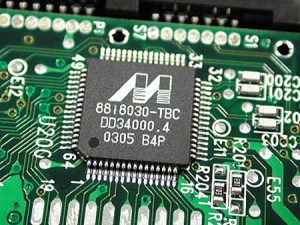
marvell_chipBy Henry M. Sneath, Esq. – Chair of the Picadio Sneath Miller & Norton, P.C. Intellectual Property Group. Contact him at hsneath@psmn.com

Last week a Pittsburgh federal court jury found on behalf of local university CMU against hard drive chip maker Marvell (See attached photo) on claims of patent infringement and willfulness. The $1.17 Billion award was huge by any standards and still faces post trial motions which could vacate the verdict or increase it for willfulness, which the jury found. Judge Fischer could grant any number of what will surely be multiple post trial motions including a motion for mistrial, which was made by Marvell counsel during CMU’s closing argument and on which she denied the motion without prejudice to rule on it after the announcement of a verdict. In other words, she could still grant a mistrial and vacate the one month trial and verdict. She could also increase the verdict by as much as threefold based on the willfulness finding. The article attached below indicates that no tech verdict this large has ever stood the test on appeal. Here is one of a number of good descriptions of the case as it has been written about extensively over the last week:  http://arstechnica.com/tech-policy/2012/12/jury-slams-marvell-with-mammoth-1-17-billion-patent-verdict/
Here also is an interesting video take on the case.
http://www.bloomberg.com/video/david-martin-on-carnegie-mellon-marvell-patent-case-er1U0P~yQXC616MuXqU_Hw.html

We will continue to follow this important case.

Apple’s Permanent Injunction Bid Against Samsung Denied

By: Joe Carnicella, intellectual property attorney with Picadio Sneath Miller & Norton, P.C.

On December 17, 2012, U.S. District Judge Koh denied Apple’s request for a permanent injunction against Samsung.  As a reminder, a jury awarded Apple $1.05 billion in damages in August after finding that Samsung had copied certain features of Apple’s iPhone and iPad.  (See our earlier blog post summarizing this verdict).  With respect to the court’s most recent ruling, Judge Koh followed the Federal Circuit’s heightened standard that requires patent-holders to show a direct link between lost market-share and a specific infringing feature of a competitor’s product.  In fact, in a previous ruling related to another lawsuit between Apple and Samsung over the patented search technology used in Apple’s Siri feature, the Federal Circuit overturned Jodge Koh’s decision to grant a preliminary injunction against Samsung’s Galaxy Nexus phone.  In the present matter, Judge Koh found that Apple’s evidence for injunctive relief fell short of the strict “causal nexus” standard because the lawyers did not prove that the copied features specifically drove consumers to buy Samsung devices.

Some attorneys believe that Apple’s main objective was to block Samsung’s sale of its products and not to obtain a financial remedy.  In this regard, attorneys are of the opinion that the record verdict was a mere slap on the wrist to Samsung, which generates approximately $100 billion in annual revenues.  Nonetheless, this recent ruling has a significant impact on the parties’ leverage in the mobile patent litigation arena.

Are Human Genes Patentable?–Supreme Court to Decide in Association for Molecular Pathology v. Myriad Genetics

by: Robert Wagner, intellectual property attorney at Picadio Sneath Miller & Norton, P.C. ()

On November 30, 2012, the United States Supreme Court granted certiorari in Association for Molecular Pathology v. Myriad Genetics (No. 12-398) to decide whether human genes are patentable. The case arises out of a declaratory judgment action brought by various researchers and institutions that certain claims in patents held by Myriad Genetics relating to isolated genes associated with a predisposition to breast and ovarian cancer are invalid because the subject matter of the patents is not eligible to be patented under 35 U.S.C. § 101.

SupremeCourtImage_1What Subject Matter Can Be Patented?

The Patent Act provides that “Whoever invents or discovers any new and useful process, machine, manufacture, or composition of matter, or any new and useful improvement thereof, may obtain a patent therefor . . . .” 35 U.S.C. § 101.

While this statement and scope is broad, it is not unlimited. The Supreme Court has held, most recently in Mayo Collaborative Services v. Prometheus, Inc., 132 S. Ct. 1289 (2012), that laws of nature, natural phenomena, and abstract ideas are not eligible to be patented, as are mental processes and products of nature.

The question in this case is whether human genes fall within the scope of Section 101, or whether they are natural phenomena that are ineligible to be patented.

Split Decision at the Federal Circuit

In deciding this issue, the Federal Circuit panel (comprised of Circuit Judges Lourie, Moore, and Bryson) each wrote separate opinions endorsing different rules to decide this issue. Judge Lourie (writing for the majority) found that human genes are patentable, reasoning that the isolated DNA molecules at issue in the claims of the patents are not found in that form in nature. Because they are different from natural materials and isolated through the product of human ingenuity, they are eligible to be patented.

Judge Moore agreed that the claims are patent eligible, but for a different reason. She noted that human genes have been patented for years and are specifically allowed by the US Patent Office. She also noted that if she was writing on a blank slate, she might reach a different conclusion.

Finally, Judge Bryson dissented, finding the claims were not patent eligible. He found that the isolated genes performed the same function as they do inside the full DNA sequence. Thus, there was no transformation, and the genes are nothing more than an extraction of a naturally-occurring phenomena.

The researchers and institutions petitioned the Supreme Court for a writ of certorari, which the Supreme Court granted on the limited question of “Are human genes patentable?”

Numerous Amici Have Weighed in

Given the importance of this issue, both to researchers and pharmaceutical companies, a number of parties have weighed in with the Supreme Court, urging that the standard for patent eligibility for human genes be clarified. Their briefs can be read here.

It will be interesting to follow this case and its briefing in the coming months to see how the Supreme Court decides this issue or whether it leaves it to Congress to decide.

U.S. Supreme Court Argument — Should Federal Courts Exercise Jurisdiction Over Patent Legal Malpractice Claims?

by: Kelly A. Williams, a shareholder at Picadio Sneath Miller & Norton, P.C.

LasSupreme Courtt week, an intellectual property law group, the American Intellectual Property Law Association (“AIPLA”), argued before the U.S. Supreme Court that state court, rather than federal court, is the appropriate venue to hear legal malpractice claims involving patents.  AIPLA was arguing in support of an amicus brief, or “friend of the court” brief that it filed in an effort to further aid and educate the Court in the matter of Gunn v. Minton.  AIPLA did not represent or have any connections to the parties in the case.

By way of background, AIPLA is a national bar association of approximately 14,000 members engaged in private and corporate practice, in government service, and in the academic community.  AIPLA represents individuals, companies and institutions involved directly or indirectly in the practice of patent, trademark, copyright and unfair competition laws, as well as other fields of law affecting intellectual property.

AIPLA took the position that the Federal Circuit, which has jurisdiction over patent cases, has taken an overly broad approach to subject matter jurisdiction.  AIPLA states that the Federal Circuit has been routinely finding federal jurisdiction over state law claims that raise patent law issues based upon Christianson v. Colt Indus. Operating Corp., 486 U.S. 800 (1988).  The Federal Circuit, according to AIPLA, has interpreted Christianson, as supporting the existence of jurisdiction any time a state law claim makes it necessary to resolve a federal patent issue.

AIPLA argued that this interpretation is wrong because Christianson did nothing to alter prior U.S. Supreme Court precedent that provided that a federal court may exercise jurisdiction over a state law claim raising a federal issue only when it is necessary, disputed and substantial.  This only occurs, according to AIPLA, when a claim creates a controversy as to significant patent law issues, such as a controversy regarding the validity of a patent, the construction or effect of a patent statute or a principle of patent law.  The Federal Circuit has combined these separate considerations, “necessary, disputed and substantial,” into a single question of whether any patent issue is “necessary” to the state law claim.

AIPLA also argued that by asserting subject matter jurisdiction over malpractice claims involving patents, the Federal Circuit is disturbing the Congressionally approved balance of federal and state judicial responsibilities.  Further, allowing federal courts to exercise jurisdiction over various state law claims merely because those claims raise a patent law issue diminishes the right of litigants to select a forum based on the traditional well-pleaded complaint rule.  This rule states that the plaintiff is “the master of its complaint” and may have its cause heard in state court by avoiding claims based on federal law.  However, the Federal Circuit’s exercise of jurisdiction over such claims forces litigants to litigate in federal court, even if the case involves local disputes involving local interests, simply because the dispute raises an issue relating to patent law.

For more information, the entire amicus brief of the AIPLA can be found here and a Law360 article can be found here (subscription required).

Method to Estimate Risk of Fetal Down’s Syndrome Not Patent-Eligible Subject Matter

By: Joe Carnicella, intellectual property attorney at Picadio Sneath Miller & Norton, P.C.

On November 20, 2012, the Federal Circuit held that a method to assess the risk of fetal Down’s syndrome is not patent-eligible subject matter pursuant to 35 U.S.C. 101.  In PerkinElmer Inc. v. Intema Ltd., a unanimous panel considered the issue of patentability under section 101 and concluded that Intema’s screening patent, U.S. Patent No. 6,573,103 (“the ‘103 patent”), was not drawn to patent-eligible subject matter.

According to 35 U.S. C. 101, “Whoever invents or discovers any new and useful process, machine, manufacture, or composition of matter, or any new and useful improvement thereof, may obtain a patent therefor . . . .”  The U.S. Supreme Court has held that section 101, while broad in nature, is subject to certain limitations, and laws of nature, natural phenomena, and abstract ideas are not patentable.  Mayo Collaborative Servs. v. Prometheus Labs, Inc., 132 S. Ct. 1289, 1293 (2012).  For example, mental processes and products of nature are not patent-eligible subject matter.  For a process claim to cover a patentable application of, for example, a natural law, it must contain other elements or a combination of elements sufficient to ensure that the patent in practice amounts to significantly more than a ptent upon the natural law itself.

The ‘103 patent disclosed specific screening methods, which used markers from both the first and second trimesters of pregnancy, to estimate the risk of fetal Down’s syndrome.  The Federal Circuit relied on two decisions to support its ruling that such methods do not cover patent-eligible subject matter.  In Mayo Collaborative Services, the U.S. Supreme Court held that two patents on a diagnostic test used to treat autoimmune diseases were invalid because patents based on the use of a natural law must also contain an inventive concept.  In Association for Molecular Pathology v. Myriad Genetics Inc., the Federal Circuit held that isolated human genes are patent-eligible but method claims for comparing or analyzing DNA sequences are not patent-eligible because the process claims were drawn to abstract mental processes.  With respect to PerkinElmer, the Federal Circuit noted that the ‘103 patent did not require any action besides comparing data with known statistical information.  Also, the court concluded that the relationship between screening marker levels and the risk of fetal Down’s syndrome related to a law of nature claim.  According to the Federal Circuit, because the asserted claims recite an ineligible mental step and natural law, and no aspect of the method converts these ineligible concepts into patent applications of those concepts, the claims cannot stand.

Hor v. Chu–Laches and Correcting Inventorship

by: Robert Wagner, intellectual property attorney at Picadio Sneath Miller & Norton, P.C. ()

This week, the Federal Circuit issued an opinion clarifying the time in which an individual who believes he or she is a co-inventor of an invention (but is not listed as an inventor) must act in order to correct the inventorship of a patent or patent application. Under 35 U.S.C. § 256, the Patent Office or the courts may correct any errors in the naming of the inventors in an issued patent. In Hor v. Chu, No. 2011-1540, the Federal Circuit determined that an individual who believes himself or herself to be an omitted inventor has six years from the date the patent issues to attempt to correct the inventorship, or the presumption of laches will apply. This is true even if the individual knows of the inventorship problem before the patent issues.

The patents at issue in this case involved high temperature superconductors and had a rather long history. The applications were filed in 1987 and 1989 by a professor from the University of Houston (Chu), but the patents did not issue until 2006 and 2010, respectively, due to a lengthy interference proceeding. A graduate student (Hor) and another scientist (Meng) who worked in Chu’s lab contended that they were co-inventors of the two patents. The patents listed Chu as the sole inventor, though. The trial court found that both Hor and Meng were aware (or should have been aware) that Chu applied for the patents without listing their names no later than the early 1990s. Hor did not file suit until 2008, and Meng did not move to intervene until 2010, however. Chu moved for summary judgment, arguing that Hor and Meng’s claims were barred by laches, which is a doctrine that can bar a claim if a plaintiff delays filing suit for more than six years after the claim accrues. Based on the trial court’s determination that Hor and Meng knew of the inventorship issue in the 1990s, the trial court found that their suit was barred by the doctrine of laches.

The Federal Circuit reversed, finding that the statute (35 U.S.C.§ 256) is quite clear that claim to correct inventorship requires that the patent issue first. Therefore, neither Hor nor Meng could have brought the § 256 claim until after the patents issued. Because laches cannot bar a claim before it accrues, the Federal Circuit held that Hor and Meng’s knowledge in the early 1990s could not bar their § 256 claims. Instead, the laches clock can only start on the day the patents issued. Because Hor and Meng filed suit within six years of these dates, the Federal Circuit held that the trial court erred in granting summary judgment on the basis of laches:

[T]he laches period for a § 256 correction of inventorship claim begins to run when “the omitted inventor knew or should have known of the issuance of the patent,” regardless of whether the omitted inventor knew or should have known of the omitted inventorship while the patent application was pending before the PTO.

While recognizing that this holding could create incentives for omitted inventors to wait to challenge their omission, the Federal Circuit felt it was bound by the statutory language and the case law regarding laches. In addition, the Federal Circuit noted that a different holding could create unnecessary work, given that claims are often narrowed or dropped during prosecution and who should be an inventor may not be clear until the patent actually issues.