Category Archives: Patents

Supreme Court’s Decision to Grant Cert in Limelight v. Akamai Joint Infringement Case

by: Robert Wagner, intellectual property attorney at Picadio Sneath Miller & Norton, P.C. ()

driTodayFor a discussion of the Supreme Court’s recent decision to grant cert to resolve the fractured Federal Circuit en banc decision in Akamai Technologies, Inc. v. Limelight Networks, Inc. (Nos. 2009-1372, -1380, -1416, -1417) on what constitutes joint infringement and inducing infringement, take a look at our post today on DRI Today’s blog.

Supreme Court Announces It Will Hear Four New Intellectual Property Cases

by: Robert Wagner, intellectual property attorney at Picadio Sneath Miller & Norton, P.C. ()

SupremeCourtImage_1The Supreme Court announced on Friday that it will hear four additional intellectual property cases this term, which makes nine total intellectual property cases this term so far. Brief summaries of the issues presented are provided below, along with links to more information about each of these cases from our friends at SCOTUSblog.

New Cases

Limelight Networks, Inc. v. Akamai Technologies, Inc. (No. 12-786)

The issue in this case is whether a party may be liable for infringement under either 35 U.S.C. § 271(a) or § 271(b) where two or more entities join together to perform all of the steps of a process claim.

Nautilus, Inc. v. Biosig Instruments, Inc. (No. 13-369)

Two issues are raised in this case. Does the Federal Circuit’s acceptance of ambiguous patent claims with multiple reasonable interpretations—so long as the ambiguity is not “insoluble” by a court—defeat the statutory requirement of particular and distinct patent claiming? And, does the presumption of validity dilute the requirement of particular and distinct patent claiming?

POM Wonderful v. Coca-Cola (No. 12-761)

The issue in this case is whether the court of appeals erred in holding that a private party cannot bring a Lanham Act claim challenging a product label regulated under the Food, Drug, and Cosmetic Act.

ABC, Inc. v. Aereo, Inc. (No. 13-461)

The issue in this case is whether a company “publicly performs” a copyrighted television program when it retransmits a broadcast of that program to thousands of paid subscribers over the Internet.

Previous Cases

Medtronic v. Boston Scientific Corp. (No. 12-1128)

The issue in this case is is whether, in a declaratory judgment action brought by a licensee under MedImmune, the licensee has the burden to prove that its products do not infringe the patent, or whether (as is the case in all other patent litigation, including other declaratory judgment actions), the patentee must prove infringement.

This case was argued on November 5, 2013.

Lexmark International v. Static Control Components (No. 12-873)

The issue in this case is whether the appropriate analytic framework for determining a party’s standing to maintain an action for false advertising under the Lanham Act is (1) the factors set forth in Associated Gen. Contractors of Cal., Inc. v. Cal. State Council of Carpenters (“AGC”), 459 U.S. 519, 537-45 (1983), as adopted by the Third, Fifth, Eighth, and Eleventh Circuits; (2) the categorical test, permitting suits only by an actual competitor, employed by the Seventh, Ninth, and Tenth Circuits; or (3) a version of the more expansive “reasonable interest” test, either as applied by the Sixth Circuit in this case or as applied by the Second Circuit in prior cases.

This case was argued on December 3, 2013.

Highmark Inc. v. Allcare Management Systems (No. 12-1163)

The issue in this case is whether a district court’s exceptional-case finding under 35 U.S.C. § 285 (in a patent infringement lawsuit), based on its judgment that a suit is objectively baseless, is entitled to deference.

This case will be argued on February 26, 2014.

Octane Fitness v. Icon Health and Fitness (No. 12-1184)

The issue in this case is whether the Federal Circuit’s promulgation of a rigid and exclusive two-part test for determining whether a case is “exceptional” under 35 U.S.C. § 285 improperly appropriate a district court’s discretionary authority to award attorney fees to prevailing accused infringers in contravention of statutory intent and this Court’s precedent, thereby raising the standard for accused infringers (but not patentees) to recoup fees and encouraging patent plaintiffs to bring spurious patent cases to cause competitive harm or coerce unwarranted settlements from defendants?

This case will be argued on February 26, 2014.

Alice Corporation Pty. Ltd. v. CLS Bank International (No. 13-298)

The issue in this case is whether claims to computer-implemented inventions—including claims to systems and machine, processes, and items of manufacture—are directed to patent-eligible subject matter within the meaning of 35 U.S.C. § 101 as interpreted by this Court.

This case will be argued on March 31, 2014.

Prosecution History Estoppel Applies to Design Patents

by: Robert Wagner, intellectual property attorney at Picadio Sneath Miller & Norton, P.C. ()

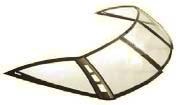
WindshieldThe Federal Circuit issued an interesting opinion today in Pacific Coast Marine Windshields Ltd. v. Malibu Boats, LLC (Case No. 2013-1199) and authored by Judge Dyk, holding for the first time that prosecution history estoppel applies to design patents and that a patentee can surrender subject matter during prosecution through its actions.

Background

The owner and CEO of Pacific Coast filed a design patent application in which he submitted drawings showing five “patentably distinct groups of designs” and claimed an “ornamental design of a marine windshield with a frame, a tapered corner post with vent holes and without said vent holes, and with a hatch andwithout said hatch, as shown and described.” The examiner issued a restriction requirement and required the applicant to elect a single group (and file additional applications for the remaining groups, if desired).

In response, the applicant chose the first designated group and amended the claim to remove the vent hole and hatch language: “the ornamental design of a marine windshield with a frame, and a pair of tapered corner posts.” He also cancelled figures 7-12, leaving just the embodiment with four circular holes on the corner post and a hatch on the front of the windshield. The remaining figures (1-6) showed alternated views of the four-hole embodiment. The amended application ultimately issued as a design patent.

Pacific Coast filed suit against Malibu Boats for making and selling windshields with three trapezoidal holes on the corner posts (shown above). Malibu Boats moved for summary judgment of non-infringement, arguing that Pacific Coast surrendered the non-four-hole embodiments on the grounds of prosecution history estoppel. The District Court agreed, and entered summary judgment in favor of Malibu Boats. Pacific Coast appealed.

The Federal Circuit Reverses and Remands

The Court first noted that while prosecution history estoppel is more often raised in the context of utility patents, the doctrine nonetheless applies to design patents. Surprisingly, this was an issue of first impression for the Court (although recognized in treatises and by district courts previously). The Court did note that the context is somewhat different, however.

For utility patents, infringement can occur either literally or under the doctrine of equivalents. Design patents are different and do not require literal identity to impose liability. Instead, liability arises if someone applies the patented design or any colorable imitation of it (in other words, sufficient similarity is sufficient). Thus, literal infringement and equivalents infringement are intertwined from the start.

The Court determined that doctrine of prosecution history estoppel should apply to design patent prosecution in order to preserve the public notice function of the process. A patentee should not be able to recapture subject matter that it abandoned during prosecution.

To determine whether prosecution history estoppel applies, the court must consider (1) whether there was a surrender of material, (2) whether it was for reasons of patentability, and (3) whether the accused design is within the scope of the surrender.

For design patents, the drawings define the scope of the invention, not the claims. Therefore, the court must look to what materials in the drawings the applicant surrendered. Here, the applicant removed drawings with two holes and no holes in the corner post. This constituted surrender of these designs and limited the design to a windshield with four holes in the corner post.

The Court next determined that the material was not surrendered for reasons of patentability—e.g., anticipation, obviousness, etc.—but it was surrendered in order to secure the patent. Pacific Coast argued that the doctrine of prosecution history estoppel only applies to surrenders to avoid the prior art, but the Court disagreed, finding the doctrine was broader than that. Any narrowing amendment made to satisfy any requirement of the Patent Act that narrows the scope of the patent qualifies. The Court concluded that amendments to satisfy a restriction requirement for design patents qualify. Notably, the Court specifically stated that it was expressing no opinion on whether this same analysis would apply to utility patents.

Finally, the Court considered whether the accused design was within the scope of the surrender. Malibu Boats argued that everything but a four-hole design was surrendered, but the Court wasn’t so sure. The patentee clearly surrendered a two-hole design and obtained coverage for a four-hole design, but did not seek coverage or surrender a three-hole design. Malibu Boats did not argue that a three-hole design was not colorably different from a two-hole design. Therefore, the Court concluded that no prosecution history estoppel arose because the surrendered material was different from the accused device (two-hole versus three-hole). The Court noted that under these procedural circumstances that it did not have to engage in an analysis of whether the scope of the surrender was to be measured by a colorable imitation standard.

Conclusion

This case presents an interesting new decision in the design patent field. Design patentees need to be careful when faced with restriction requirements, and should seriously consider filing divisional applications to avoid potential problems like these. The case also highlights the dangers of sailing in uncharted legal waters, where the Court may hold the lack of an argument against you when it may not have been clear that you needed to make it in the first place.

Federal Circuit Addresses Fee Shifting Statute–Kilopass Tech. v. Sidense Corp.

by: Robert Wagner, intellectual property attorney at Picadio Sneath Miller & Norton, P.C. ()

Federal CircuitWhile Congress continues to consider various bills that would make it easier for prevailing parties in patent cases to collect their attorneys’ fees from non-prevailing parties, the Federal Circuit is not sitting by quietly. In Kilopass Technology, Inc. v. Sidense Corp. (Case No. 2013-1193), the Court vacated and remanded a District Court’s decision not to award attorneys’ fees to a prevailing defendant. In an opinion written by Judge O’Malley, the Federal Circuit reviewed the Court’s jurisprudence on fee shifting and clarified the elements that must be met for a defendant that prevails.

Background

This case was a more typical competitor-on-competitor patent infringement lawsuit, rather than the “troll” variety that has been in the news of late. Kilopass and Sidense are competitors in the embedded non-volatile memory market. Kilopass became concerned that Sidense may infringe some of Kilopass’s patents after reviewing a Sidense patent application, so Kilopass hired a law firm to conduct an infringement analysis. Based on an initial review, counsel believed that there was a sufficient basis to send a friendly letter to Sidense, asking if it wanted a license and for an explanation of why it did not infringe. Sidense responded by pointing out differences between its design and the claims of the patent and declined a license.

After receiving Sidense’s response, counsel noted that his infringement analysis assumed that Sidense was making a product according to the design in its patent application, which is not always the case. He noted that if Sidense was making the product in a different way, it did not infringe (at least literally). He recommended that Kilopass try to find out how Sidense’s memory cells were made in order to better assess its potential infringement.

A Kilopass employee obtained further information that showed that Sidense was not making its memory cells the same way that it described in its patent application. With this information, counsel determined that Sidense was likely not infringing and that Kilopass would have a tough case.

Kilopass hired another law firm to conduct another analysis. The second firm preliminarily determined that Kilopass appeared to have a valid claim of infringement via equivalence, but that it needed to conduct a more detailed analysis to be sure. Counsel started this analysis, but was instructed by Kilopass to stop all work.

A team of engineers from Kilopass then concluded that Sidense infringed under the doctrine of equivalence after reviewing the patent and Sidense’s products. Kilopass filed suit approximately two years later.

During the litigation, the District Court found out that Kilopass was making inconsistent arguments regarding the proper claim construction before the Court and before the USPTO BPAI during a concurrent inter partes re-examination. The Court then chastised Kilopass for its gamesmanship. The Court ultimately granted summary judgment of non-infringement to Sidense, which the Federal Circuit summarily affirmed.

Sidense sought its fees, which the District Court ultimately denied because Kilopass performed substantial pre-filing investigations and obtained opinions from two different law firms and its own engineers that it had a non-baseless claim of infringement.

Federal Circuit’s Holding

The Federal Circuit ultimately vacated the District Court’s determination that an award of attorneys’ fees was not warranted and remanded for a further determination. In doing so, the Court clarified the current state of the law with respect to whether a court should award attorneys’ fees to a prevailing defendant in a patent infringement lawsuit.

The determination of whether to award fees is a two-step process, which must be shown by clear and convincing evidence. First, the prevailing defendant must show that the patentee’s claims of infringement were objectively baseless. Second, the defendant must show that the patentee brought the claims in subjective bad faith.

In assessing the subjective prong, a defendant does not have to show that the patentee knew its claims were baseless. A showing that it should have known based on the totality of the circumstances, which can include how objectively baseless the claims were, is sufficient. The Court noted that direct proof of subjective bad faith is often very difficult to come by, so indirect proof can be sufficient.

The Court reiterated that a showing of bad faith is required for an award of fees, although, had the panel been working on a clean slate and not bound by prior precedent, it may have found otherwise. Bad faith must be considered by viewing the totality of the circumstances. The Court also noted that in most cases the objective prong will likely be determinative of this issue, and the subjective bad faith requirement “may prove to have little effect.”

Interestingly, the Court considered whether clear and convincing evidence should be required to prove these elements. It ultimately concluded that it must, but did so based on the fact that it had to follow the precedent set by earlier panels.

Finally, the Court rejected Sidense’s proposal that fee shifting should be appropriate whether a patentee files a lawsuit having little likelihood of success. Unlike Sidense’s other arguments, the Federal Circuit did not seem inclined to expand liability in this fashion.

Conclusion

The Federal Circuit set forth a clearer statement of the law regarding awards of attorneys’ fees to prevailing defendants in patent infringement lawsuits. This was not a patent troll case, so the overtones and political issues associated with that topic were not present. The decision seemed to signal that the panel would have considered significant changes to the law but for the prior precedent that bound it. This may signal that this case is ripe for an en banc review. We shall have to wait and see.

The other take away is that the Federal Circuit is not going to tolerate patentees bringing weak cases, especially when counsel expresses in writing that infringement is unlikely. Patentees need to be cautious about bringing such suits, especially where it appears that literal infringement is not present.

Survey of Proposed Patent Lawsuit Reform Bills in Congress (Part 4)

by: Robert Wagner, intellectual property attorney at Picadio Sneath Miller & Norton, P.C. ()

Another patent reform bill is quickly working its way through Congress as we speak. The Innovation Act (HR 3309) passed the House by a vote of 325–91 and is pending in the Senate, which has said that it will fast track passage of it. Many of the provisions are similar to those found in the other proposed pieces of legislation that we discussed earlier (see parts 1, 2, and 3), and address some of the concerns I raised in these prior discussions. One of the more significant provisions of the Innovation Act is the fee-shifting provision, which proposes to amend 35 U.S.C. § 285.

US Capitol BuildingUnder current law, patent lawsuits follow the American system in which each side pays its own legal fees. The current § 285 modifies the American rule somewhat, providing that in exceptional cases the court may award attorney fees to the prevailing party. The Innovation Act scraps the American rule altogether and flips current § 285 by providing that the court must award reasonable attorney fees and expenses to the prevailing  in patent cases, “unless the court finds that the position of the non prevailing party or parties was substantially justified or that special circumstances make an award unjust.” (Proposed § 285(a)).

As an initial matter, this provision is supposed to deter parties from filing frivolous lawsuits, but it is not clear that it will accomplish this purpose. To be a prevailing party requires a judgment by the court, likely either on a motion for summary judgment or a trial verdict. Neither of these happen towards the beginning of litigation, so a defendant will have to still incur significant costs to get to the point at which it has a chance to recover its fees. Many defendants will likely not want to incur those costs, especially if the plaintiff appears to lack significant assets or has a plausible basis for its claims (even with the interest party expansion of proposed § 285(b)).

This provision may, in fact, create an incentive for patent trolls, especially in cases where they have a strong patent but the damages are not significant. By defaulting to a loser pays system, there is a greater likelihood that patent trolls will file additional lawsuits and defendants in these kinds of cases will be required to pay the troll’s litigation costs, even when a troll would have been unlikely to prove willful infringement.

Finally, there are real questions about what it means to be prevailing party and what the “substantially justified” standard means. For instance, what happens if a plaintiff prevails on one claim, but the jury find non-infringement on another? Are both parties prevailing parties? Or, if the plaintiff prevails on one patent, but the defendant invalidates the other asserted patent? What happens if a target of a demand letter files a declaratory judgment action and forces a patentee into a lawsuit that it never intended to file?

Also, when, exactly, does a non-prevailing party have to be substantially justified in its position? At that time it first asserts the position? At the end of the litigation? At any time? These are not trivial concerns. A defendant at the initial stages of a lawsuit often will assert non-infringement and invalidity defenses and counterclaims before having much time to analyze the claims or having the benefit of the  court’s claim constructions. Those positions may be only in their initial stages with modest support, but later blossom into very strong positions. Similarly, what appear to be strong positions can turn into weak ones once the court issues its claim construction. In which of these situations are the positions substantially justified?

Courts will undoubtedly struggle with interpreting these standards and deciding who, exactly, “deserves” to pay and who does not. Moreover, while these new rules are clearly targeted towards fighting patent trolls, they apply equally in all patent cases, including the traditional competitor vs. competitor lawsuits. By changing the rules, it will create additional pressures that are more likely to be borne by defendants, who have no control over whether they are sued, than by plaintiffs, who can have significant control over when they sue and which patents/claims they sue on.

The Innovation Act looks likely to pass the Senate and be signed into law by the President. It will be interesting to see if it accomplishes what it purports to set out to do.

Defendant Files RICO Complaint Against Patent Troll

by: Robert Wagner, intellectual property attorney at Picadio Sneath Miller & Norton, P.C. ()

A colleague brought to my attention an interesting development in a patent “troll” case in the Southern District of New York that may foreshadow a new approach for companies to defend themselves in these kinds of lawsuits. It is a rather extreme approach, and it will be interesting to see how this case progresses.

MoneyLumen View Technology LLC filed a patent infringement lawsuit against FindTheBest.com, Inc. (Case No. 1:13-cv-03599-DLC). While this case was still pending, FindTheBest filed a separate lawsuit against Lumen View, its principals, and other related entities (Case No. 1:13-cv-06521-DLC), bringing claims under RICO and for extortion, abuse of process, civil conspiracy, and unfair business practices.

Background

According to the two complaints, FindTheBest operates a web site that provides consumers with data-driven comparisons of a wide variety of products and subjects, such as phones, cars, and ski resorts. Lumen View contends that FindTheBest infringes U.S. Patent No. 8,069,073, which relates to a “System and Method for Facilitating Bilateral and Multilateral Decision-Making.”

Lumen View was formed on February 23, 2012 and obtained the patent in suit seven days later. It allegedly conducts no other business aside from filing patent lawsuits and licensing in patents, and has filed more than 20 patent infringement lawsuits relating to the’073 patent in the last 18 months.

On May 30, 2013 (the day after the complaint was filed), FindTheBest claims that it received a letter from Lumen View enclosing the complaint and demanding that FindTheBest pay to settle the lawsuit. Lumen View apparently initially demanded that FindTheBest pay $85,000 for a licensing fee, but dropped that demand to $55,000 the day before FindTheBest’s answer to the complaint was due. FindTheBest rejected Lumen View’s settlement demands and continued with the lawsuit. The parties have submitted a list of claim terms to be construed, and FindTheBest has moved for judgment on the pleadings, arguing that the patent is invalid under 35 U.S.C. § 101.

On September 16, 2013, FindTheBest filed an entirely separate lawsuit in the same court against Lumen View, its principals, and other related entities, bringing claims for violating RICO, extortion, abuse of process, civil conspiracy, and unfair business practices. FindTheBest contends that Lumen View engaged in a criminal enterprise by failing to conduct proper due diligence before filing its lawsuits and knowingly pursuing frivolous cases in order to extort settlement money from its targets. Defendants in this second case have not yet answered the complaint.

What This Case Means

This is an interesting and aggressive approach to fighting back against what FindTheBest apparently believes is a frivolous and improper lawsuit. It is curious that it is bringing this second lawsuit at this time—before the first case is even close to being resolved. One wonders how the Court will respond to this second action. Will it allow it to proceed? Will it stay or dismiss the case pending the resolution of the first lawsuit?

Civil RICO cases are generally disfavored by the courts and notoriously hard to prosecute. In general, such a claim would be extremely difficult for a defendant to bring in a standard patent infringement lawsuit because RICO requires a pattern of racketeering activity and multiple victims. In this case, however, because Lumen View allegedly filed multiple extortionate lawsuits against multiple “victims,” FindTheBest may be able to overcome these pleading hurdles.

Regardless, as long as the second lawsuit exists, it creates immense pressure on the patent holder and the persons and companies associated with it and likely completely changes the settlement dynamic. For one thing, Lumen View likely cannot take the approach that Loadsys did against Kapersky Labs and unilaterally drop the lawsuit if it thinks it will not prevail. Such an action would feed right into FindTheBest’s theory that the lawsuit was a sham and increase the chances that FindTheBest could prevail in its lawsuit.

It will be interesting to follow this case and see how it progresses. If nothing else, it gives all parties something more to think about in lawsuits of this type.

What to Do About Patent Trolls?

by: Robert Wagner, intellectual property attorney at Picadio Sneath Miller & Norton, P.C. ()

The problem with patent assertion entities (PAEs), also called patent trolls, continues to be a hot-button issue among practitioners, companies, and the government. Recently, Gene Quinn from IPWatchdog wrote about one proposed solution he and others see to this problem—encouraging companies to fully litigate these lawsuits and not to settle quickly, thereby raising the costs of this kind of litigation to discourage the bringing of weak lawsuits. But, is this really a practical solution to the troll problem for everyone?

TrollQuinn believes that the issues faced by patent troll targets are similar to those faced by the auto insurance industry in the 1980s. Back then, the auto insurance companies frequently chose to settle cases for less than the litigation costs, regardless of the merits. This settlement strategy encouraged litigants to bring even more lawsuits, often of a questionable nature. It wasn’t until the industry decided to fight all of the cases that the more frivolous lawsuits disappeared. As Quinn states, “[t]he lesson was clear: if you don’t fight, and if you make yourself an easy target, people will sue you on both good and bad cases.”

In March 2011, Lodsys approached 55 companies demanding compensation for their alleged infringement of Lodsys patents. 51 of the companies settled out of court, and 3 others settled a few weeks after Lodsys brought suit. Only Kapersky Labs decided to vigorously defend itself. After over two years of litigation and just days before trial, Lodsys unilaterally gave up and dropped its lawsuit against Kapersky Labs. Because Kapersky Labs adopted this approach, Quinn expects that it will no longer be considered an “easy target” and that it will not be sued as often as before.

My feeling is that Quinn is correct that settling weak patent infringement lawsuits only encourages and perpetuates the troll system. The problem that I have with his solution is that it is not a universal solution and is really only effective for a limited number of defendants.

While some trolls are looking for a large payday, many are willing to settle for relatively small amounts in comparison to the litigation costs—in the thousands or tens of thousands range (see, e.g., here and here). Patent litigation is expensive, with pre-trial costs ranging from $350,000 to $1,000,000 for modest size cases and total costs ranging from $700,000 to $2,000,000. Thus, a company is faced with a decision of whether to pay a few thousand dollars now to end the litigation and receive a fully-paid up license or spends hundreds of thousands or millions to hopefully defeat the troll in the courts (which is no guarantee, as any litigator will tell you).

The law potentially allows a prevailing defendant to collect its fees and expenses, but there is no certainty that a defendant can meet the high standard required to get such an award or that it will be able to collect such an award from the troll. Many of these trolls are shell companies with little to no real assets. Even if the company is able to get and collect its fees and expenses, that still would not make it whole. The company will likely have wasted 2+ years in the litigation process, with all the distractions and stresses that it creates.

In addition, for many companies the litigation costs represent a significant portion of its annual profits. It may have to lay off workers, forgo development, or otherwise restrict its operations during the litigation simply to pay its legal bills. That is a lot to ask of a company in order to fulfill some greater societal goal of discouraging patent trolls, especially if it is not a frequent target of patent trolls itself.

Trolls are obviously counting on companies to engage in exactly this type of analysis, which is why they offer certainty at a relative low cost. It encourages companies to pay quickly and avoid both the long-term legal costs and the potential of a large judgment against them. As a purely business decision, it is hard to ignore, even if it is extortionate.

So, what is the solution? Larger companies that are frequent troll targets should seriously consider the approach that Kapersky Labs used (and Quinn encourages) of aggressively litigating these kinds of cases. (Of course, these companies always need to evaluate the merits of the case before deciding whether to litigate.) By raising the costs of doing business and denying the trolls an easy score, trolls will likely begin to avoid suing that company, which is a win for both the company and the legal system.

It is more difficult for smaller companies to adopt this approach, however. These companies likely will need help from the Courts, Congress, and the President to create disincentives to discourage trolls from bringing frivolous lawsuits in the first place. In the end, as long as there is money to be made, the trolls will exist and will find ways around whatever rules are in place.

Some of the approaches being discussed in Congress (see here, here, and here) are a step towards solving this problem, but they are likely not the final answer. Given that the large patent litigation costs are the primary driver that forces companies to settle, mechanisms that reduce these costs or delay them until a patent holder can establish that it has brought a legitimate lawsuit may be part of the answer.

In addition, in the rush to rid the world of trolls, Congress needs to be careful that they don’t tip the balances in traditional, “legitimate” patent infringement lawsuits so as to make it unreasonably difficult for patent owners to enforce their patents against actual infringers. The bottom line is that there do not appear to be any easy answers to this problem.

Fed Circuit Excuses Late Payment of Maintenance Fee

by: Robert Wagner, intellectual property attorney at Picadio Sneath Miller & Norton, P.C. ()

The Federal Circuit issued an interesting decision this week in Network Signatures, Inc. v. State Farm Mut. Ins. Co., No. 2012-1492, that reversed a District Court’s finding of inequitable conduct based on a patentee’s late payment of a maintenance fee. The Court found that even though the patentee intentionally did not pay the maintenance fee, such a failure could be excused when the reason for not paying was based on an erroneous assumption that no one wanted to license the patent. Judge Newman wrote the opinion for the Court, joined by Judge Wallach. Judge Clevenger dissented.

Federal Circuit

Background

A scientist at the Naval Research Labs (NRL) obtained a patent relating to internet security. There did not appear to be any commercial interest in the patent, so NRL permitted the patent to lapse by not paying the 7.5-year maintenance fee. Unbeknownst to NRL, a company (Network Signatures) was interested in licensing the patent. The company attempted to contact NRL via phone and e-mail before the maintenance fee was due, but was unable to do so because NRL’s systems were not functioning properly. Network Signatures was finally able to reach NRL two weeks after the maintenance fee was due. At this point, NRL’s lawyer filed a petition with the PTO for delayed payment, asserting that the failure to pay was unintentional. The PTO granted the request, and NRL ultimately licensed the patent to Network Signatures.

Network Signatures sued State Farm for patent infringement. After discovery, State Farm moved for summary judgment on inequitable conduct, arguing that the failure to pay the maintenance fee was not unintentional. The District Court granted summary judgment, and Network Signatures appealed.

The Federal Circuit’s Decision

The Federal Circuit reversed. In doing so, it looked at the nature of the proceedings before the PTO. NRL’s lawyer submitted a standard form relating to late payments and checked a box indicating that the failure to pay was unintentional. The Court stated that “[w]e do not agree that this action constituted material misrepresentation with an intent to deceive.” The Court found no irregularities with NRL’s conduct after learning of Network Signatures’ desire to license the patent and that it was not improper to use the PTO’s forms (which did not require an explanation).

The dissent disagreed, and found that NRL intentionally allowed the patent to lapse. This was not the kind of unintentional delay that should be excused. While the dissent agreed with the District Court that State Farm had proven the first element of an inequitable conduct defense (material misrepresentation), the dissent found that the second element (specific intent to deceive) was a factual question that precluded summary judgment.

Conclusion

This is a rather odd decision. NRL clearly intended to allow its patent to lapse, but would not have done so but for a problem in communication. But, is this a “mistake of fact” that would excuse its abandonment? The majority failed to address the boundaries of the “mistake of fact” defense proffered by the patentee, and, instead, seems to have relied on the bare-bones nature of the PTO form used. This decision does not seem to provide much clarity as to what constitutes an “unintentional” abandonment of a patent.

$1Billion Pittsburgh Verdict Against Marvell Upheld on Post Trial Motions

marvell_chipPosted by Henry M. Sneath, Esq., Chair of the Intellectual Property group at Pittsburgh law firm Picadio Sneath Miller & Norton, P.C.

hsneath@psmn.com or 412-288-4013

Following a December 2012 Patent verdict in favor of CMU against Marvell in the amount of just over $1 Billion, the trial Judge Nora Barry Fischer of the USDC for the Western District of Pa. has denied the post trial motions filed by Marvell. Carnegie Mellon University v. Marvell Technology Group, Ltd., Case No. 09-290 (W.D. Penn. Feb 28, 2013). She has also found that the infringement was willful, but has not determined yet whether to multiply the verdict as an enhanced award.  The lengthy opinion is attached for review. More analysis to come and we will follow what is surely to be an appeal to the CAFC by Marvell. Opinion available only on PACER at the moment but we will search for an independent copy to post.

UPDATE: The full decision of the Court is available here.

The Battle Over the Seeds Continues

by: Kelly A. Williams, a shareholder at Picadio Sneath Miller & Norton, P.C.

SeedsA coalition of famers, seed sellers, and agricultural organizations that challenged Monsanto’s patents on genetically-modified seeds is appealing a decision of the Federal Circuit on June 10, 2013 to the U.S. Supreme Court in Organic Seed Growers and Trade Asss’n v. Monsanto Co. (The petition for a writ of certiorari may be found here).  The plaintiffs filed a declaratory judgment action seeking a ruling of non-infringement and invalidity of Monsanto’s genetically modified seed patents. These are the same patents that Monsanto successfully enforced in Bowman v. Monsanto, which was decided by the U.S. Supreme Court on May 13, 2013. The Federal Circuit held that there was no justiciable case or controversy because Monsanto had made binding assurances that it would not take legal action against growers whose crops might inadvertently contain traces of Monsanto biotech genes, and the plaintiffs fell within this group.