Author Archives: Henry Sneath

Ripple Effect from Alice and Mayo Cases Being Felt in Patent World

shutterstock_26396608By: Henry Sneath, Chair of the Intellectual Property practice at Picadio Sneath Miller & Norton, P.C. in Pittsburgh, Pa.  hsneath@psmn.com or 412-288-4013

Sharing a great post from Dennis Crouch and his tremendous blog: Patently-O

New Section 101 Decisions: Patents Invalid

The Supreme Court’s decisions from Alice and Mayo are beginning to really have their impact. A few examples:

  • Walker Digital v. Google (D. Del. September 2014) (data processing patent invalid under 101 as an abstract idea) (Judge Stark).
  • Genetic Tech v. LabCorp and 23AndMe (D. Del. September 2014) (method of predicting human performance based upon genetic testing invalid under 101 as a law of nature) (report and recommendation from Magistrate Judge to Judge Stark)
  • Ex parte Cote (P.T.A.B. August 2014) (computer method and hardware for ‘phase shifting’ design data invalid under 101)
  • Ex parte Jung (P.T.A.B. August 2014) (diagnostic method associated with epigenetic risk factors invalid under 101).” Patently-O.

To view the entire post – please visit Patently-O at this link: http://tinyurl.com/otj6v6n

Pittsburgh Business Success Story: “Branding Brand. Com” for Mobile Commerce

Branding Brand LogoBy: Henry Sneath, Chair of the Intellectual Property practice at Picadio Sneath Miller & Norton, P.C.  hsneath@psmn.com or 412-288-4013

I attended the Pittsburgh Technology Council’s breakfast briefing this morning and heard a great presentation by Jeffrey Hennion, President of Pittsburgh based Branding Brand: http://www.brandingbrand.com/ Founded by 3 CMU students, the company is now an industry leader in Mobile Commerce website and application development. They serve some of the largest retailers and businesses who are now true believers in the power of mobile commerce and mobile wallet apps – shopping from a phone. Costco (See Image below), Dicks Sporting Goods, Sephora, Ralph Lauren and countless more retailers have large percentages of sales now flowing through Branding Brand platforms. Starbucks is currently the leader in mobile commerce sales with its QR code based “mobile wallet”, which allows purchases from a scan of your phone screen.  A next big market for these products is the travel industry. As you ride from the airport to the hotel, you use your phone to check into the hotel, you skip the registration desk, open your room with your phone which has been activated with a mobile key. As Jeff described it – these developments are fascinating, but sometimes a little creepy. The percentage of phone driven ordering, and mobile wallet purchased sales is zooming upward and some companies could face loss of significant market share if they don’t keep up.

Costco_1_large

Busy IP Docket for US Supreme Court Upcoming

Sneath, Henry 2012 headshotBy: Henry Sneath, Chair of the Intellectual Property practice at Picadio Sneath Miller & Norton, P.C.  hsneath@psmn.com or 412-288-4013

The US Supreme Court has a very busy IP docket in the next few months. Close watchers of the court predict a continuing focus on IP cases. Our friends at AIPLA provide a nice summary of the oral argument schedule of IP cases through April. We will follow these cases and post any important decisions. See AIPLA link below: http://www.aipla.org/resources2/reports/2014/Pages/140214AIPLA-Direct.aspx

$1Billion Pittsburgh Verdict Against Marvell Upheld on Post Trial Motions

marvell_chipPosted by Henry M. Sneath, Esq., Chair of the Intellectual Property group at Pittsburgh law firm Picadio Sneath Miller & Norton, P.C.

hsneath@psmn.com or 412-288-4013

Following a December 2012 Patent verdict in favor of CMU against Marvell in the amount of just over $1 Billion, the trial Judge Nora Barry Fischer of the USDC for the Western District of Pa. has denied the post trial motions filed by Marvell. Carnegie Mellon University v. Marvell Technology Group, Ltd., Case No. 09-290 (W.D. Penn. Feb 28, 2013). She has also found that the infringement was willful, but has not determined yet whether to multiply the verdict as an enhanced award.  The lengthy opinion is attached for review. More analysis to come and we will follow what is surely to be an appeal to the CAFC by Marvell. Opinion available only on PACER at the moment but we will search for an independent copy to post.

UPDATE: The full decision of the Court is available here.

Supreme Court Decides Gunn v. Minton Patent Legal Malpractice Case – State Court It Is

Authored by Henry M. Sneath, Esq.  – Chair of the Intellectual Property Practice Group at Picadio Sneath Miller & Norton, P.C. , Pittsburgh, Pa.

Sneath, Henry 2012 headshotToday – The US Supreme Court in Gunn v. Minton decided that a patent legal malpractice case is properly brought in state court. The court held that even though the “case within a case” standard would require interpretation of a patent and other typically Federal Issues, that “case within a case” is a hypothetical case, that does not need to be in Federal Court.  Further the court wrote:

“Because of the backward-looking nature of a legal malpractice claim, the question is posed in a merely hypothetical sense: If Minton’s lawyers had raised a timely experimental-use argument, would the result in the patent infringement proceeding have been different? No matter how the state courts resolve that hypothetical “case with a case,” it will not change the real-world result of the prior federal patent litigation. Minton’s patent will remain invalid.

Nor will allowing state courts to resolve these cases undermine “the development of a uniform body of [patent] law. … Congress ensured such uniformity by vesting exclusive jurisdiction over actual patent cases in the federal district courts and exclusive appellate jurisdiction in the Federal Circuit. … In resolving the non-hypothetical patent questions those cases present, the federal courts are of course not bound by state court case-within-a-case patent rulings. … In any event, the state court case-within-a-case inquiry asks what would have happened in the prior federal proceeding if a particular argument had been made. In answering that question, state courts can be expected to hew closely to the pertinent federal precedents. It is those precedents, after all, that would have applied had the argument been made.”

We previously reported on this case and will follow for any interesting cases which actually try one of these malpractice cases in state court. Here is the opinion delivered by Chief Justice Roberts: http://tinyurl.com/a474okm

Supreme Court Hears Argument on Patent Legal Malpractice Case

Supreme CourtYesterday the US Supreme Court heard oral argument  in Gunn v. Minton (No. 11-1118, U.S. Sup) where the issue is the long debated question of proper jurisdiction for patent law legal malpractice cases. For more background, please see a December 3, 2012 post by my colleague Kelly Williams in this blog and to read the Amicus brief filed by the AIPLA.  Read the transcript of yesterday’s Supreme Court oral argument here: http://www.supremecourt.gov/oral_arguments/argument_transcripts/11-1118.pdf    The central question is whether legal malpractice claims against attorneys representing the inventors, for failing to raise an “experimental use” defense to the “on-sale bar” doctrine, constituted a question of exclusive state law, or one of exclusive federal jurisdiction and law – like traditionally all Patent Law issues.  The issue turns on whether such a state court claim can create or affect Federal patent rights. Our friends at Lexis-Nexis have summarized the oral argument and issues at this link: http://t.co/GaRLnbwN

We will follow this case closely: For more information, please contact Henry M. Sneath, Esq. chair of the Intellectual Property Group at Picadio Sneath Miller & Norton, P.C. in Pittsburgh, Pa. 412-288-4013 or hsneath@psmn.com  Firm Website: www.psmn.com  Blog at: www.pitiptechblog.com or follow him on Twitter @picadiosneath

Large Patent Verdict in Pittsburgh – Marvell Case

marvell_chipBy Henry M. Sneath, Esq. – Chair of the Picadio Sneath Miller & Norton, P.C. Intellectual Property Group. Contact him at hsneath@psmn.com

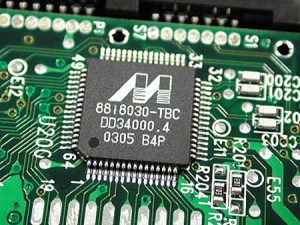
Last week a Pittsburgh federal court jury found on behalf of local university CMU against hard drive chip maker Marvell (See attached photo) on claims of patent infringement and willfulness. The $1.17 Billion award was huge by any standards and still faces post trial motions which could vacate the verdict or increase it for willfulness, which the jury found. Judge Fischer could grant any number of what will surely be multiple post trial motions including a motion for mistrial, which was made by Marvell counsel during CMU’s closing argument and on which she denied the motion without prejudice to rule on it after the announcement of a verdict. In other words, she could still grant a mistrial and vacate the one month trial and verdict. She could also increase the verdict by as much as threefold based on the willfulness finding. The article attached below indicates that no tech verdict this large has ever stood the test on appeal. Here is one of a number of good descriptions of the case as it has been written about extensively over the last week:  http://arstechnica.com/tech-policy/2012/12/jury-slams-marvell-with-mammoth-1-17-billion-patent-verdict/
Here also is an interesting video take on the case.
http://www.bloomberg.com/video/david-martin-on-carnegie-mellon-marvell-patent-case-er1U0P~yQXC616MuXqU_Hw.html

We will continue to follow this important case.

Pittsburgh Weather

Pittsburgh has so far escaped any major damage from Sandy. However, as we learn from cable reporters standing in waist deep water and TV logo monogramed wetsuits, we know that many folks in areas along the east coast have not fared so well. In Pittsburgh we have had a lot of rain and will have some river flooding, but perhaps got lucky, while surrounded by major weather issues. There are more people in West Virginia and the midwest who are still to see some nasty weather. We wish all those affected well in the days to come.

PATENT TROLLS: $29 Billion Cost!

by: Henry M. Sneath, a shareholder at Picadio Sneath Miller & Norton, P.C.

Our friends at Thompson and Knight have provided the latest on the cost to businesses and society of Patent Troll litigation. The costs remain staggering.  We share their article with you and commend you to its reading. Thanks to author R. David Donoghue. See link below: http://www.retailpatentlitigation.com/2012/08/07/trolls-cost-society-29-billion-with-a-b-in-2011/#page=1

Western Pennsylvania Patent Lawsuit Filings Increase in 2012

by: Henry M. Sneath, a shareholder at Picadio Sneath Miller & Norton, P.C.

The USDC for the Western District of Pennsylvania enacted local patent rules in 2005. The court has also been designated as one of a number of courts in the country that are part of a Pilot Program where patent filings will be monitored and wherein participating courts will establish certain practices for the administration of Patent cases. While patent filings have been rather flat in the Pa. Western District in the last few years, the number has skyrocketed in 2012. There were 11 Patent cases filed in 2011, but this year, through July, there have already been 28 filings, or more properly, 11 actual filings and 17 transfers of cases from the Eastern District of Texas, or which relate to those transferred cases.

These latter 17 cases have related to the same or similar patents held by a company called Maxim Integrated Products, which is suing numerous big name companies, and which is being sued in declaratory judgment actions by many other big name companies. Many of their suits were filed, not surprisingly in Texas Eastern, but were transferred to Pa. Western.

Declaratory Judgment actions followed and have been filed here by other companies whom Maxim allegedly threatened with suit. The patent (s) at issue relate to the transfer of “cash” between secure devices (eg: mobile to mobile). The Summary of the Invention in this ‘510 patent is set forth as:

“The present invention is an apparatus, system and method for communicating a cash equivalent electronically to and from a portable module. The portable module can be used as a cash equivalent when buying products and services in the market place. The present invention comprises a portable module that can communicate to a secure module via a microprocessor based device. The portable module can be carried by a consumer, filled with electronic money at an add-money station, and be debited by a merchant when a product or service is purchased by the consumer. As a result of a purchase, the merchant’s cash drawer will indicate an increase in cash value.”

We will follow these cases and report more in the future.